Saturday, July 15, 2006

Interview: John Lennon, New York - February 1975

Date: February 1975
Location: The Dakota, New York
Interviewer: Pete Hamill
Published: 5 June 1975
Rolling Stone Magazine

There is John Lennon: thin bare arms, a rumpled T-shirt; bare feet, delicate fingers curled around a brown-papered cigarette, reaching for a cup of steaming coffee. A pale winter sun streams into the seventh-floor apartment in the Dakota, an expensive apartment house that stands like a pile of nineteenth-century memories on the corner of Seventy-second Street and Central Park West. Earlier, the Irish doorman had expressed surprise when I asked for John, because this is where Yoko Ono had lived alone for a year and a half. The building, with its gargoyles and vaulted stone turrets, has seen a lot, and has housed everyone from Lauren Bacall and Rex Reed to Rosemary's baby. There is certainly room for Dr. Winston O'Boogie.
And now John Lennon is talking in a soft, becalmed voice, the old jagged angers gone for now, while the drilling jangle of the New York streets drifts into the room. He has been back with Yoko for three days, after a wild, painful year and a half away, and there is a gray morning feel of hangover in the clean, bright room. Against a wall, a white piano stands like an invitation to begin again; a tree is framed by one window, a plant by another, both in an attitude of Zen-like simplicity, full of spaces. I think of Harold Pinter's words: "When true silence falls we are still left with echo but are nearer nakedness." There is, of course, always echo when you are with John Lennon, an echo of the loudest, grandest, gaudiest noise made in our time. But John Lennon is more than simply a Beatle, retired or in exile, more than just an echo. At thirty-four, he is moving into full maturity as a man and an artist and seems less afraid than ever before of nakedness.
We talked only briefly about the Beatles. A few years ago, John told everybody how the Beatles were more popular than Jesus Christ and for a couple of weeks that summer most of the Western world seemed to go into an uproar. Was the world really that innocent so short a time ago? No. It was just that John Lennon was explaining that the world had changed and the newspapers had to catch up; we were not going to have any more aw-shucks heroes. So we could all run in the endless emptiness of the rugby field in A Hard Day's Night, rising and falling, in slow motion or fast, but sooner or later we would have to grow up. The Beatles were custodians of childhood. They could not last.
And yet . . . and yet, it seemed when it was finally over, when they had all gone their separate ways, when Brian Epstein lay dead and Apple was some terrible mess and the lawyers and the agents and the money men had come in to paw the remains, it often seemed that John was the only one whose heart was truly broken. Cynthia Lennon said it best, when all of them were still together: "They seem to need you less than you need them." From some corner of his broken heart, John gave the most bitter interviews, full of hurt and resentment, covered over with the language of violence.
We only know a small part of what really has happened to him in the years since he met Yoko Ono. The details belong to John Lennon alone. But we know how the other Beatles stood in judgment ("like a jury") on Yoko. We know how viciously the press in England sneered at them and attacked them. Yoko saw the artist in him: "John is like a frail wind . . ." But reviewers were already saying that Yoko had ruined his art. People started to write him off. His records were selling but it wasn't like the Beatles, it wasn't even like the other Beatles. John was the one Who Had Gone Too Far.
A year and a half ago, he and Yoko split up and some people cheered. We live in strange times.
And then, as if from nowhere, came Walls and Bridges. John had a big hit single with "Whatever Gets You Thru The Night." And the music was wonderful: full of invention, tenderness, remorse, more personal than anything he had written before; the music clearly showing the effects of his time with Yoko. More than anything else, though, the songs were essays in autobiography, the words and music of a man trying to understand a huge part of his life. "I've been across to the other side / I've shown you everything, I've got nothing to hide . . ."
What follows is the result of two long talks with John Lennon at the end of a difficult year. As an interview, it is far from definitive, but nothing with ever be definitive in John Lennon's life: He is the sort of artist who is always in the process of becoming. I think of this as a kind of interim report from one of the bravest human beings I know. Oh, yes: He looked happy.

PETE HAMILL: What's your life like right now?

JOHN: Well . . . Life: It's '75 now, isn't it? Well, I've just settled the Beatles settlement. It must've happened it the last month, took three years. [pause] And on this day that you've come here, I seem to have moved back in here. In the last three days. By the time this goes out, I don't know . . . That's a big change. Maybe that's why I'm sleeping funny. As a friend says, I went out for coffee and some papers and I didn't come back [chuckles]. Or vice versa: It's always written that way, y'know. All of us. You know, the guy walked. It's never that simple.

PETE HAMILL: What did happen with you and Yoko? Who broke it up and how did you end up back together again?

JOHN: Well, it's not a matter of who broke it up. It broke up. And why did we end up back together? [pompous voice] We ended up together again because it was diplomatically viable . . . come on. We got back together because we love each other.

PETE HAMILL: I loved your line: "The separation didn't work out."

JOHN: That's it. It didn't work out. And the reaction to the breakup was all that madness. I was like a chicken without a head.

PETE HAMILL: What was the final Beatles settlement?

JOHN: In a nutshell, what was arranged was that everybody gets their own individual monies. Even up till this year - till the settlement was signed - all the monies were going into one pot. All individual records, mine, Ringo's, Paul's - all into one big pot. It had to go through this big machinery and then come out to us, eventually. So now, even the old Beatle royalties, everything goes into four separate accounts instead of one big pot all the time. That's that. The rest of it was ground rules. Everybody said the Beatles've signed this paper, that means they're no longer tied in any way.
That's bullshit. We still own this thing called Apple. Which, you can explain, is a bank. A bank the money goes into. But there's still the entity itself known as the Beatles. The product, the name, the likeness, the Apple thing itself, which still exists, and we still have to communicate on it and make decisions on it and decide who's to run Apple and who's to do what. It's not as cut and dried as the papers said.

PETE HAMILL: Do the old Beatles records still go in a pot?

JOHN: No one of us can say to EMI, "Here's a new package of Beatle material." We still have to okay everything together, you know, 'cause that's the way we want it anyway.

PETE HAMILL: There's still a good feeling among the guys?

JOHN: Yeah, yeah. I talked to Ringo and George yesterday. I didn't talk to Paul 'cause he was asleep. George and Paul are talkin' to each other in L.A. now. There's nothin' going down between us. It's all in people's heads.

PETE HAMILL: You went to one of George's concerts; what are your thoughts on his tour?

JOHN: It wasn't the greatest thing in history. The guy went through some kind of mill. It was probably his turn to get smacked. When we were all together there was periods when the Beatles were in, the Beatles were out, no matter what we were doing. Now it's always the Beatles were great or the Beatles weren't great, whatever opinion people hold. There's a sort of illusion about it. But the actual fact was the Beatles were in for eight months, the Beatles were out for eight months. The public, including the media, are sometimes a bit sheeplike and if the ball starts rolling, well, it's just that somebody's in, somebody's out. George is out for the moment. And I think it didn't matter what he did on tour.

PETE HAMILL: George told Rolling Stone that if you wanted the Beatles, go listen to Wings. It seemed a bit of a putdown.

JOHN: I didn't see what George said, so I really don't have any comment. [pause] Band on the Run is a great album. Wings is almost as conceptual a group as Plastic Ono Band. Plastic Ono was a conceptual group, meaning whoever was playing was the band. And Wings keeps changing all the time. It's conceptual. I mean, they're backup men for Paul. It doesn't matter who's playing. You can call them Wings, but it's Paul McCartney music. And it's good stuff. It's good Paul music and I don't really see the connection.

PETE HAMILL: What do you think of Richard Perry's work with Ringo?

JOHN: I think it's great. Perry's great, Ringo's great, I think the combination was great and look how well they did together. There's no complaints if you're Number One.

PETE HAMILL: George said at his press conference that he could play with you again but not with Paul. How do you feel?

JOHN: I could play with all of them. George is entitled to say that, and he'll probably change his mind by Friday. You know, we're all human. We can all change our minds. So I don't take any of my statements or any of their statements as the last word on whether we will. And if we do, the newspapers will learn about it after the fact. If we're gonna play, we're just gonna play.

PETE HAMILL: In retrospect, what do you think of the whole "Lennon Remembers" episode?

JOHN: Well, the other guys, their reaction was public. Ringo made some sort of comment that was funny, which I can't remember, something like, "You've gone too far this time, Johnnie." Paul said [stuffy voice], "Well, that's his problem." I can't remember what George said. I mean, they don't care, they've been with me for fifteen or twenty years, they know damn well what I'm like. It just so happens it was in the press. I mean, they know what I'm like. I'm not ashamed of it at all. I don't really like hurting people, but Jann Wenner questioned me when I was almost still in therapy and you can't play games. You're opened up. It was like he got me on an acid trip. Things come out. I got both reactions from that article. A lot of people thought it was right on. My only upset was Jann insisted on making a book out of it.

PETE HAMILL: Walls and Bridges has an undertone of regret to it. Did you sit down consciously to make an album like that?

JOHN: No, well . . . Let's say this last year has been an extraordinary year for me personally. And I'm almost amazed that I could get anything out. But I enjoyed doing Walls and Bridges and it wasn't hard when I had the whole thing to go into the studio and do it. I'm surprised it wasn't just all bluuuugggghhhh. [pause] I had the most peculiar year. And . . . I'm just glad that something came out. It's describing the year, in a way, but it's not as sort of schizophrenic as the year really was. I think I got such a shock during that year that the impact hasn't come through. It isn't all on Walls and Bridges though. There's a hint of it there. It has to do with age and God knows what else. But only the surface has been touched on Walls and Bridges, you know?

PETE HAMILL: What was it about the year? Do you want to try talking about it?

JOHN: Well, you can't put your finger on it. It started, somehow, at the end of '73, goin' to do this Rock 'n' Roll album [with Phil Spector]. It had quite a lot to do with Yoko and I, whether I knew it or not, and then, suddenly, I was out on me own. Next thing I'd be waking up, drunk, in strange places or reading about meself in the paper, doin' extraordinary things, half of which I'd done and half of which I hadn't done. But you know the game anyway. And find meself sort of in a mad dream for a year. I'd been in many mad dreams, but this . . . It was pretty wild. And then I tried to recover from that. And [long pause] meanwhile life was going on, the Beatles settlement was going on, other things, life was still going on and it wouldn't let you sit with your hangover, in whatever form that took. It was like something - probably meself - kept hitting me while I was trying to do something. I was still trying to do something. I was still trying to carry on a normal life and the whip never let up - for eight months. So . . . that's what was going on. Incidents: You can put it down to which night with which bottle or which night in which town. It was just sort of a mad year like that . . . And it was just probably fear, and being out on me own, and gettin' old, and are ye gonna make it in the charts? Are ye not gonna make it? All that crap, y'know. All the garbage that y'really know is not the be-all and end-all of your life, but if other things are goin' funny, that's gonna hit you. If you're gonna feel sorry for yourself, you're gonna feel sorry for everything. What it's really to do with is probably the same thing that it's always been to do with all your life: whatever your own personal problems really are, you know? So it was a year that manifested itself [switches to deep actor's voice] in most peculiar fashion. But I'm through it and it's '75 now and I feel better and I'm sittin' here and not lyin' in some weird place with a hangover.

PETE HAMILL: Why do you feel better?

JOHN: Because I feel like I've been on Sinbad's voyage, you know, and I've battled all those monsters and I've got back. [long pause] Weird.

PETE HAMILL: Tell me about the Rock 'n' Roll album.

JOHN: It started in '73 with Phil and fell apart. I ended up as part of mad, drunk scenes in Los Angeles and I finally finished it off on me own. And there was still problems with it up to the minute it came out. I can't begin to say, it's just barmy, there's a jinx on that album. And I've just started writing a new one. Got maybe half of it written . . .

PETE HAMILL: What about the stories that Spector's working habits are a little odd? For example, that he either showed off or shot off guns in the studios?

JOHN: I don't like to tell tales out of school, y'know. But I do know there was an awful loud noise in the toilet of the Record Plant West.

PETE HAMILL: What actually did happen those nights at the Troubadour when you heckled the Smothers Brothers and went walking around with a Kotex on your head asking the waitress, "Do you know who I am"?

JOHN: Ah, y'want the juice . . . If I'd said, "Do you know who I am?" I'd have said it in a joke. Because I know who I am, and I know she knew, because I musta been wearing a Kotex on me head, right? I picked up a Kotex in a restaurant, in the toilet, and it was clean and just for a gag I came back to the table with it on me head. And 'cause it stuck there with sweat, just stayed there, I didn't have to keep it on. It just stayed there till it fell off. And the waitress said, "Yeah, you're an asshole with a Kotex on," and I think it's a good remark and so what? Tommy Smothers was a completely different night and has been covered a million times. It was my first night on Brandy Alexanders and my last [laughs]. And I was with Harry Nilsson, who was no help at all [laughs].

PETE HAMILL: What's your relationship with Nilsson? Some critics say that he's been heavily influenced, maybe even badly screwed up by you.

JOHN: Oh, that's bullshit.

PETE HAMILL: . . . and that you've also been influenced by him.

JOHN: That's bullshit, too. I haven't been influenced by Harry, only that I had a lot of hangovers whenever I was with him [laughs]. I love him. He's a great guy and I count him as one of me friends. He hasn't influenced me musically. And there's an illusion going around about my production of Harry's album. That he was trying to imitate me on his album.

PETE HAMILL: You mean that he'd gone into his primal period . . .

JOHN: That's it. They're so sheeplike - put this in - and childlike about trying to put a tag on what's going on. They use these expressions like "primal" for anything that's a scream. Brackets: Yoko was screaming before Janov was ever even heard of; that was her stint, usin' her voice like an instrument. She was screamin' when Janov was still jackin' off to Freud. But nowadays, everything that's got a scream in it is called primal. I know what they're talkin' about: The very powerful emotional pitch that Harry reaches at the end of "Many Rivers to Cross" on the album I produced for him [Pussy Cats]. It's there, simply enough, because when you get to a certain point with your vocals, there ain't nowhere else to go. Was Little Richard primaling before each sax solo? That's what I want know. Was my imitation Little Richard screams I used to put on all the Beatles records before the solo - we all used to do it, we'd go aaaarrrrgggghhhh! Was that primaling? Right?

PETE HAMILL: Richard Perry has described you as a superb producer but maybe in too much of a hurry.

JOHN: That's true [laughs].

PETE HAMILL: But supposedly, when making the Beatles records, you were painstaking and slow.

JOHN: No, I was never painstaking and slow. I produced "I Am the Walrus" at the same speed I produced "Whatever Gets You Thru the Night." I would be painstaking on some things, as I am now. If there's a quality that occasionally gets in the way of my talent, it's that I get bored quick unless it's done quick. But "I Am the Walrus" sounds like a wonderful production. "Strawberry Fields" sounds like a big production. But I do them as quick as I possibly can, without losing (a) the feel and (b) where I'm going. The longest track I personally spent time on was "Revolution 9," which was an abstract track where I used a lot of tape loops and things like that. I still did it in one session. But I accept that criticism and I have it of myself. But I don't want to make myself so painstaking that it's boring. But I should [pause] maybe t'ink a little more. Maybe. But on the other hand I think my criticism of somebody like Richard Perry would be that he's great but he's too painstaking. It gets too slick and somewhere in between that is where I'd like to go. I keep finding out all the time - what I'm missing that I want to get out of it.

PETE HAMILL: Is there anybody that you'd like to produce? For example, Dylan?

JOHN: Dylan would be interesting because I think he made a great album in Blood on the Tracks but I'm still not keen on the backings. I think I could produce him great. And Presley. I'd like to resurrect Elvis. But I'd be so scared of him I don't know whether I could do it. But I'd like to do it. Dylan, I could do, but Presley would make me nervous. But Dylan or Presley, somebody up there . . . I know what I'd do with Presley. Make a rock & roll album. Dylan doesn't need material. I'd just make him some good backings. So if you're reading this, Bob, you know . . .

PETE HAMILL: Elton John has revived "Lucy in the Sky with Diamonds." How do you feel about him as an artist?

JOHN: Elton sort of popped in on the session for Walls and Bridges and sort of zapped in and played the piano and ended up singing "Whatever Gets You Thru the Night" with me. Which was a great shot in the arm. I'd done three quarters of it, "Now what do we do?" Should we put a camel on it or a xylophone? That sort of thing. And he came in and said, "Hey, ah'll play some piano!" Then I heard he was doing "Lucy" and I heard from a friend - 'cause he was shy - would I be there when he cut "Lucy"? Maybe not play on it but just be there? So I went along. And I sang in the chorus and contributed the reggae in the middle. And then, again through a mutual friend, he asked if it got to be Number One, would I appear onstage with him, and I said sure, not thinkin' in a million years it was gonna get to Number One. Al Coury or no Al Coury, the promotion man at Capitol. And there I was. Onstage.

PETE HAMILL: I read somewhere that you were very moved by the whole thing.

JOHN: I was moved by it, but everybody else was in tears. I felt guilty 'cause I wasn't in tears. I just went up and did a few numbers. But the emotional thing was me and Elton together. Elton had been working in Dick James's office when we used to send our demos in and there's a long sort of relationship musically with Elton that people don't really know about. He has this sort of Beatle thing from way back. He'd take the demos home and play them and . . . well, it meant a lot to me and it mean a hell of a lot to Elton, and he was in tears. It was a great high night, a really high night . . . Yoko and I met backstage. And somebody said, "Well, there's two people in love." That was before we got back together. But that's probably when we felt something. It was very weird. She came backstage and I didn't know she was there, 'cause if I'd known she was there I'd've been too nervous to go on, you know, I would have been terrified. She was backstage afterward, and there was just that moment when we saw each other and like, it's like in the movies, you know, when time stands still? And there was silence, everything went silent, y'know, and we were just sort of lookin' at each other and . . . oh, hello. I knew she'd sent Elton and I a flower each, and we were wearin' them onstage, but I didn't know she was there and then everybody was around us and flash flash flash. But there was that moment of silence. And somebody observed it and told me later on, after we were back together again, and said, "A friend of mine saw you backstage and thought if ever there was two in love, it's those two." And I thought, well, it's weird somebody noticed it . . . So it was a great night . . . .

PETE HAMILL: There seems to be a lot of generosity among the artists now.

JOHN: It was around before. It's harder when you're on the make, to be generous, 'cause you're all competing. But once you're sort of up there, wherever it is . . . The rock papers love to write about the jet-setting rock stars and they dig it and we dig it in a way. The fact is that, yeah, I see Mick, I see Paul, I see Elton, they're all my contemporaries and I've known the other Beatles, of course, for years, and Mick for ten years, and we've been hangin' around since Rock Dreams. And suddenly it's written up as they're-here-they're-there-they're-everywhere bit, and it looks like we're trying to form a club. But we always were a club. We always knew each other. It just so happens that it looks more dramatic in the paper.

PETE HAMILL: How do you relate to what we might call the rock stars of the Seventies? Do you think of yourself as an uncle figure, a father figure, an old gunfighter?

JOHN: It depends who they are. If it's Mick or the Old Guard, as I call them, yeah, they're the Old Guard. Elton, David are the newies. I don't feel like an old uncle, dear, 'cause I'm not that much older than half of 'em, heh heh. But . . . yeah, I'm interested in the new people. I'm interested in new people in America but I get a kick out of the new Britons. I remember hearing Elton John's "Your Song," heard it in America - it was one of Elton's first big hits - and remember thinking, "Great, that's the first new thing that's happened since we happened." It was a step forward. There was something about his vocals that was an improvement on all of the English vocals until then. I was pleased with it. And I was pleased with Bowie's thing and I hadn't even heard him. I just got this feeling from the image and the projections that were coming out of England of him, well, you could feel it.

PETE HAMILL: Do you think of New York as home now?

JOHN: Yeah, this is the longest I've ever been away from England. I've almost lived here as long as I've lived in London. I was in London from, let's see, '64, '65, '66, '67, actually in London 'cause then it was your Beatlemania bit and we all ended up like a lot of rock & rollers end up, living an hour away from London in the country, the drivin'-in-from-the-big-estate bit. 'Cause you couldn't live in London, 'cause people just bugged the ass off you. So I've lived in New York longer than I actually lived in London.

PETE HAMILL: In view of the immigration case, is one reason you've stayed here so long because if you left, they'd pull a Charlie Chaplin on you and not let you back in?

JOHN: You bet. There's no way they would let me back. And . . . it's worth it to me. I can last out, without leaving here, another ten years, if that's the way they want to play it. I'll earn enough to keep paying them. I'm really getting blackmailed. I'm paying to stay. Paying takes, on one hand, about a half million dollars, and I've hardly worked very hard for that. I mean, that's with sittin' on me arse and I've paid a half million in taxes. So I'm paying them to attack me and keep me busy and harass me, on one hand, while on the other hand I've got to pay me own lawyers. Some people think I'm here just to make the American dollars. But I don't have to be here to make the dollars. I could earn American dollars just sittin' in a recording studio in Hong Kong. Wherever I am, the money follows me. It's gonna come out of America whether they like it or not.

PETE HAMILL: Right. And the government doesn't choose that John Lennon makes money. The people who buy your music do that.

JOHN: The implication that John Lennon wants to come to the land of milk and honey 'cause it's easier to pick up the money, so I can pick it up directly instead of waiting for it to arrive in England. Or Brazil. Or wherever I decide to do it. I resent the implication, especially as I'm payin' through the nose. I don't mind paying taxes, either, which is strange. I never did. I don't like 'em using it for bombs and that. But I don't think I could do a Joan Baez. I don't have that kind of gut. I did never complain in England either, because, well, it's buying people teeth . . . I'm sick of gettin' sick about taxes. Taxes is what seems to be it, and there's nothin' to be done about it unless you choose to make a crusade about it. And I'm sick of being in crusades because I always get nailed up before I'm even in the crusade. They get me in the queue while I'm readin' the pages about it: "Oh, there's a crusade on, I wonder should I . . ." I mean, I get caught before I've ever done anything about it.

PETE HAMILL: You went through a period of really heavy involvement in radical causes. Lately you seem to have gone back to your art in a more direct way. What happened?

JOHN: I'll tell you what happened literally. I got off the boat, only it was an airplane, and landed in New York, and the first people who got in touch with me was Jerry Rubin and Abbie Hoffman. It's as simple as that. It's those two famous guys from America who's callin': "Hey, yeah, what's happenin', what's goin' on? . . ." And the next thing you know, I'm doin' John Sinclair benefits and one thing and another. I'm pretty movable, as an artist, you know. They almost greeted me off the plane and the next minute I'm involved, you know.

PETE HAMILL: How did all of this affect your work?

JOHN: It almost ruined it, in a way. It became journalism and not poetry. And I basically feel that I'm a poet. Even if it does go ba-deeble, eedle, eedle, it, da-deedle, deedle, it. I'm not a formalized poet, I have no education, so I have to write in the simplest forms usually. And I realized that over a period of time - and not just 'cause I met Jerry Rubin off the plane - but that was like a culmination. I realized that we were poets but we were really folk poets, and rock & roll was folk poetry - I've always felt that. Rock & roll was folk music. Then I began to take it seriously on another level, saying, "Well, I am reflecting what is going on, right?" And then I was making an effort to reflect what was going on. Well, it doesn't work like that. It doesn't work as pop music or what I want to do. It just doesn't make sense. You get into that bit where you can't talk about trees, 'cause, y'know, y'gotta talk about "Corruption on Fifty-fourth Street"! It's nothing to do with that. It's a bit larger than that. It's the usual lesson that I've learned in me little thirty-four years: As soon as you've clutched onto something, you think - you're always clutchin' at straws - this is what life is all about. I think artists are lucky because the straws are always blowin' out of their hands. But the unfortunate thing is that most people find the straw hat and hang on to it, like your best friend that got the job at the bank when he was fifteen and looked twenty-eight before he was twenty. "Oh, this is it! Now I know what I'm doing! Right? Down this road for the next hundred years" . . . and it ain't never that. Whether it's a religious hat or a political hat or a no-political hat: whatever hat is was, always looking for these straw hats. I think I found out it's a waste of time. There is no hat to wear. Just keep moving around and changing clothes is the best. That's all that goes on: change.
At one time I thought, well, I'm avoidin' that thing called the Age Thing, whether it hits you at twenty-one, when you take your first job - I always keep referrin' to that because it has nothing to do, virtually, with your physical age. I mean, we all know the guys who took the jobs when we left school, the straight jobs, they all look like old guys within six weeks. You'd meet them and they'd be lookin' like Well, I've Settled Down Now. So I never want to settle down, in that respect. I always want to be immature in that respect. But then I felt that if I keep bangin' my head on the wall it'll stop me from gettin' that kind of age in the head. By keeping creating, consciously or unconsciously, extraordinary situations which in the end you'd write about. But maybe it has nothin' to do with it. I'm still mullin' that over. Still mullin' over last year now. Maybe that was it. I was still trying to avoid somethin' but doin' it the wrong way 'round. Whether it's called age or whatever.

PETE HAMILL: Is it called growing up?

JOHN: I don't want to grow up but I'm sick of not growing up - that way. I'll find a different way of not growing up. There's a better way of doing it than torturing your body. And then your mind. The guilt! It's just so dumb. And it makes me furious to be dumb because I don't like dumb people. And there I am, doing the dumbest things . . . I seem to do the things that I despise the most, almost. All of that to - what? - avoid being normal.
I have this great fear of this normal thing. You know, the ones that passed their exams, the ones that went to their jobs, the ones that didn't become rock & rollers, the ones that settle for it, settled for it, settled for the deal! That's what I'm trying to avoid. But I'm sick of avoiding it with violence, you know? I've gotta do it some other way. I think I will. I think just the fact that I've realized it is a good step forward. Alive in '75 is my new motto. I've just made it up. That's the one. I've decided I want to live. I'd decided I wanted to live before, but I didn't know what it meant, really. It's taken however many years and I want to have a go at it.

PETE HAMILL: Do you think much of yourself as an artist at fifty or sixty?

JOHN: I never see meself as not an artist. I never let meself believe that an artist can "run dry."
I've always had this vision of bein' sixty and writing children's books. I don't know why. It'd be a strange thing for a person who doesn't really have much to do with children. I've always had that feeling of giving what Wind in the Willows and Alice in Wonderland and Treasure Island gave to me at age seven and eight. The books that really opened my whole being.

PETE HAMILL: Is there anything left to say about the immigration case?

JOHN: People get bored with hearin' about Lennon's immigration case. I'm bored with hearin' about it. The only interesting thing is when I read these articles people write that were not instigated by me. I learn things I didn't know anything about. I didn't know about Strom Thurmond. I had no idea - I mean I knew something was going on, but I didn't have any names. I'm just left in the position of just what am I supposed to do? There doesn't seem to be anything I can do about it. It's just . . . bloody crazy. Terry Southern put it in a nice sort of way. He said, "Well, look, y'keep 'em all happy, ya see? The conservatives are happy 'cause they're doin' somethin' about ya and the liberals are happy 'cause they haven't thrown you out. So everybody's happy! [pause] Except you!" [laughter] I'm happy I'm still here. I must say that. And I ain't going. There's no way they're gonna get me out. No way. They're not gonna drag me in chains, right? So I'm just gonna have to keep paying. It's bloody ridiculous. It's just . . . beyond belief.

PETE HAMILL: So nothing has changed with the departure of Nixon.

JOHN: I'm even nervous about commenting on politics. They've got me that jumpy these days. But it's a bit of an illusion to think 'cause Old Nick went that it's all changed. If it's changed, prove it, show me the change.

PETE HAMILL: Does the case get in the way of your work?

JOHN: It did. It did. There's no denying it. In '72, it was really gettin' to me. Not only was I physically having to appear in court cases, it just seemed like a toothache that wouldn't go away. Now I just accept it. I just have a permanent toothache. But there was a period where I just couldn't function, you know? I was so paranoid from them tappin' the phone and followin' me. How could I prove that they were tappin' me phone?
There was a period when I was hangin' out with a group called Elephant's Memory. And I was ready to go on the road for pure fun. I didn't want to go on the road for money. That was the time when I was standing up in the Apollo with a guitar at the Attica relatives' benefit or ending up on the stage at the John Sinclair rally. I felt like going on the road and playing music. And whatever excuse - charity or whatever - would have done me. But they kept pullin' me back into court! I had the group hangin' 'round, but I finally had to say, "Hey, you better get on with your lives." Now, the last thing on earth I want to do is perform. That's a direct result of the immigration thing. In '71, '72, I wanted to go out and rock my balls off onstage and I just stopped.

PETE HAMILL: Have you made any kind of flat decision not to ever go on the road again?

JOHN: No. I've stopped making flat decisions. I change me mind a lot. My idea of heaven is not going on the road.

PETE HAMILL: Will you ever be free of the fact that you were once a Beatle?

JOHN: I've got used to the fact - just about - that whatever I do is going to be compared to the other Beatles. If I took up ballet dancing, my ballet dancing would be compared with Paul's bowling. So that I'll have to live with. But I've come to learn something big this past year. I cannot let the Top Ten dominate my art. If my worth is only to be judged by whether I'm in the Top Ten or not, then I'd better give up. Because if I let the Top Ten dominate my art, then the art will die. And then whether I'm in the Top Ten is a moot point. I do think now in terms of long term. I'm an artist. I have to express myself. I can't be dominated by gold records. As I said, I'm thirty-four going on sixty. The art is more important than the thing and sometimes I have to remind meself of it. Because there's a danger there, for all of us, for everyone who's involved in whatever art they're in, of needing that love so badly that. . . . In my business, that's manifested in the Top Ten.

PETE HAMILL: So this last year, in some ways, was a year of deciding whether you wanted to be an artist or a pop star?

JOHN: Yeah. What is it I'm doing. What am I doing? Meanwhile, I was still putting out the work. But in the back of me head it was that: What do you want to be? What are you lookin' for? And that's about it. I'm a freakin' artist, man, not a fuckin' racehorse.

Monday, July 10, 2006

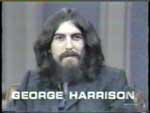
Interview: George Harrison, New York City - November 23, 1971

Date: 23 November 1971
Show: The Dick Cavett Show
Interviewer: Dick Cavett
Broadcast: 23 November 1971
ABC Television

DICK CAVETT: I guess everyone knows by now that you're Gary Wright.

GEORGE: Right.

DICK CAVETT: Where do you know Gary Wright and this group from?

GEORGE: From England. He used to be in a band called Spooky Tooth and I met him during my album, All Things Must Pass. He came and played piano on the whole album, so I returned the favour tonight.

DICK CAVETT: That's very nice. Now how many in the audience knew that George was in the group up there? How many didn't know?

GEORGE: I'm not in the group; just for now.

DICK CAVETT: No, I meant that they recognise you there in that subtle way we had you camouflaged, bending in the background like that. You know, you're only the second member of your former organisation that I've ever met. I know John. . .

GEORGE: You didn't meet the other eight.

DICK CAVETT: No. Were there that many?

GEORGE: Yes, hundreds.

DICK CAVETT: Really? I only know John.

GEORGE: You know the eighteenth Beatle?

DICK CAVETT: There were rumours that the Beatles were not always the same person. In fact, there was once a rumour that it wasn't even the real four of you who came here over on one trip, that they just sent four. . .

GEORGE: We just sent four dummies out there.

DICK CAVETT: That, and what was the other one? Oh, that you actually were all bald, and had no hair, and that was so you could go out in the street and not be recognised.

GEORGE: It's all truth. Pure truth.

DICK CAVETT: Oh it is? Oh, well then, they aren't rumours.

GEORGE: Let's take a little march through time with bird's eye frozen orange.

DICK CAVETT: Plus . . . well, he's right. You weren't supposed to see that. Let's do take a little march through time.

GEORGE: He couldn't miss it, really.

DICK CAVETT: I know. No, no, is this confusing you a little bit? This set-up?

GEORGE: It is, all these cameras, don't know which one I'm supposed to be looking at.

DICK CAVETT: Must be exciting for you to be next to a famous person.

GEORGE: It is, it's very exciting. I don't do this every night, you know.

DICK CAVETT: No. I do, unfortunately. No, you're probably wondering what we were looking at. George saw the lights go on over the cameras, which give me the lead-in to the commercial. Actually, I don't think the audience at home cares what we're looking at, I mean, they're more interested in what we think.

GEORGE: Well, I want to know what's looking at me, really. You know, I like to check it out, where, there he is.

DICK CAVETT: They always say you don't have to worry about what camera's on, that they'll find you.

GEORGE: Yes.

DICK CAVETT: That's how I. . .

GEORGE: Big Brother is watching you.

DICK CAVETT: Whatever. Yoko sat in that very chair.

GEORGE: Oh. Well, I bet many people have sat in this chair.

DICK CAVETT: Well, a lot of people have sat in it, but I was just thinking. . .

GEORGE: I saw the show, it was very nice.

DICK CAVETT: Did you see that? Yeah.

GEORGE: There was one thing they forgot to plug. So I thought I'd plug it for them, and that's their new Christmas record. "We wish you a merry Christmas, war is over." Get yours now, thank you.

DICK CAVETT: Is there such a record?

GEORGE: Yes, he made it after he was on the show, so he didn't get a chance to talk about it.

DICK CAVETT: Is there a slight undercurrent of hostility between you and the other members of the group? You can tell me, I'm not going to tell anybody.

GEORGE: No, no. Really, John, you know, I just thought I'd take the opportunity and promote his record for him. "War is over if you want it, happy Christmas." Apple Records.

DICK CAVETT: Well, are you in any sense in contact with each other, I mean. . .

GEORGE: Yeah, I saw him last night, actually, at the premiere of Raga, which is what we should talk about, maybe.

DICK CAVETT: Okay. But I mean, what did you say?

GEORGE: I said, "Hi, hello."

DICK CAVETT: Do you have writers who think of these things, or do you just have them ready and you can just snap them right out?

GEORGE: Yeah, we have writers at home. Rooms full of them.

DICK CAVETT: What did he come back with right away?

GEORGE: With "Hi."

DICK CAVETT: Yeah? Gee, this sort of beat . . . was there more, or did you just go on. . .? It's pretty good.

GEORGE: Well, you've got real boring people, you know, to talk to on your show. I'm probably the biggest bore you've ever had on the show.

DICK CAVETT: Really? You think?

GEORGE: Yeah.

DICK CAVETT: Well, I'll be the judge of that. Listen, I'll tell you. . .

GEORGE: Oh, well I don't really, you know, they ask me, "Do you want to come on the Dick Cavett Show?" And I said, "I got nothing to talk about, really." They said, "Well, think of something, you know, anything." So I thought, okay, we'll go and talk about Raga, which is. . .

DICK CAVETT: A film. You mean, that's it? When we're done talking about that then. . .

GEORGE: Then I go, yeah.

DICK CAVETT: You don't like to talk, then.

GEORGE: Well, not really. Sometimes, if there's something to say, but there's really nothing to say these days.

DICK CAVETT: You know, I had that feeling too. People think that I must love to talk, and that I would love to go to parties and yak my head off, and I could go for months without talking.

GEORGE: Well, you talk every night, don't you?

DICK CAVETT: I know, and I've never liked it. I mean, I don't crave conversation, I could sit in an empty room for days and days. I'd have to leave occasionally, but not to talk, I mean, in other words, I don't have a terrific appetite for talking. The reason I'm rattling on like this is that you've just frightened me by telling me that you don't like to talk. And I figure, I have to fill then this last hour of the show.

GEORGE: You just talk, and I'll watch.

DICK CAVETT: Okay, let's do talk about the film. And then . . . well, before we get to that. . .

GEORGE: Before we get to that, let's get to something else.

DICK CAVETT: You and John and Yoko really do meet though, you're not really gritting your teeth?

GEORGE: No, no. We're good friends.

DICK CAVETT: All of that about her being the problem with the group, was that slightly silly that one woman could be so much of a problem?

GEORGE: No, the group had problems long before Yoko came along. Many problems, folks.

DICK CAVETT: Can you remember who was the first to say, you know, I'll bet we'll break up one day, that this won't go on, that this is sort of a dream that we can't all stick together?

GEORGE: No. I don't really remember anything about the Beatle days. It seems like a sort of, you know, previous incarnation when I think about it.

DICK CAVETT: And a long time ago, like another life?

GEORGE: Yeah.

DICK CAVETT: Yeah. Do you regret any of it?

GEORGE: No, no. Don't regret really anything, you know? I mean, that's what happened and it was good, you know, it was good, but it was also good to carry on and do something else. In fact, it was a relief.

DICK CAVETT: Sometimes they say you were. . .

GEORGE: Some people can't understand that, you know, because Beatles were such a big deal. They can't understand why we should actually enjoy splitting up. But there's a time, you know, there's a time when people grow up and they leave home or whatever they do. And they go for a change, you know. And it was really time for a change.

DICK CAVETT: Don't you think a lot of the people just envied the idea of being world celebrities, though?

GEORGE: Well, some people, you know, would go on and on forever singing the same tune and playing the same gig if they were making some money, you know? But I think we'd all rather give that up and try going on our own and try doing something we really want to do. And if we don't make it, then hard luck. But as it happens, we've all got such a lot of goodwill hanging over from being Beatles. I mean, you probably wouldn't have me on the show if I hadn't of been one, let's face it.

DICK CAVETT: No, you wouldn't get here on looks alone.

GEORGE: We will return after this message from our lovely station.

DICK CAVETT: Oh, now wait a minute. Just because that comes on doesn't mean you have to do it right away.

GEORGE: Oh.

DICK CAVETT: Do you feel like doing it now?

GEORGE: I just did it.

DICK CAVETT: Oh.

GEORGE: I see, four or five minutes.

DICK CAVETT: He's right, folks. We will return after this message from our local station. See, when you say it. . .

--

DICK CAVETT: Do you think you might have been the most anxious of the four to get out? I get that impression from reading about you.

GEORGE: Maybe, maybe, yeah. It was very. . .

DICK CAVETT: Why?

GEORGE: Because over the years, you know, I had such a lot of songs mounting up that I really wanted to do, but I only got my quota of one or two tunes per album. And that way, I would have had to record about a hundred Beatle albums just to get out the tunes I had in 1965.

DICK CAVETT: Were you held down by the other fellows?

GEORGE: Well, very subtly, yes.

DICK CAVETT: Yeah?

GEORGE: I would not really, they didn't strap me down or anything like that. But it was just the way things happened, you know. It started off, I didn't write, they wrote, then I started to write, and it was sort of trying to push in a bit.

DICK CAVETT: You don't actually read or write music, do you?

GEORGE: No.

DICK CAVETT: Then how, when you say write. . .

GEORGE: Well, write.

DICK CAVETT: If you have a tune and it hits you, how do you get it down?

GEORGE: Just keep it in your head, you know. Just work it out on the piano or on the guitar.

DICK CAVETT: But then, do you tape it or what preserves it?

GEORGE: Sometimes, sometimes, put it on tape. But usually you can remember it in your head. If you don't, I mean, I write the words down and remember the tune in my head.

DICK CAVETT: Do you wish you'd studied composition and all of that?

GEORGE: No.

DICK CAVETT: You don't need it.

GEORGE: Well, maybe it would help somewhere. I probably wouldn't have to pay a copyist.

DICK CAVETT: Yeah. But you don't miss it, I mean, you can. . .

GEORGE: No, no.

DICK CAVETT: It would just help.

GEORGE: Because it's not really sort of music, you know. It's like, I mean, there's a difference between people who write music and classical things and big arrangements to the sort of thing I do. It's just really, very simple.

DICK CAVETT: And the other guys, most of the melodies were John's or Paul's that were done on the albums.

GEORGE: Yeah. That was funny when John was on. Every time you had a commercial break, and then came back part twenty and they keep playing Paul's songs.

DICK CAVETT: Just put our guests at ease, I guess that's what we do. But they always talk about you as the real musician of the group, and if you haven't studied music, what do they mean by that? That you're more serious about music? You've seen that though, haven't you?

GEORGE: I don't know what they mean. It's probably because I didn't smile so much.

DICK CAVETT: To be a real musician you have to be sour, I suppose.

GEORGE: Yeah.

DICK CAVETT: There was also the theory that you attracted more girls by being the quiet one, in the same sense that a guy at a party who sits in the corner will have the girl come over and say, "Aw, what's the matter?" This was not a calculated philosophy on your part.

GEORGE: It's just a dirty rumour.

DICK CAVETT: Was it?

GEORGE: Just a rumour, yeah.

DICK CAVETT: Yeah.

GEORGE: I think Paul used to get them all with his, you know.

DICK CAVETT: Do nerves hit you badly?

GEORGE: Oh yeah, terrible. Sometimes I sit down, like before this show, and try and figure out where it is inside that starts all this tension.

DICK CAVETT: Where's it coming from?

GEORGE: I don't know, no idea, otherwise I could control it.

DICK CAVETT: They used to say that's a way to get rid of tension, is if you can try to sit down and think exactly where it is, is it in your stomach, or what gives you that. . .?

GEORGE: It comes from everywhere all at the same time. That's the problem. It's sort of abstract somehow, nerves. Well, the way nerves act upon you.

DICK CAVETT: Does any kind of meditation help before a concert?

GEORGE: Yes, but that's a sort of different thing, you know, to this. I mean, you can't, you can meditate and get peaceful, but then the moment they say "The Dick Cavett Show!" and then there you are. . .

DICK CAVETT: Does this happen when you're watching the show or just when you're. . .?

GEORGE: Yeah. Yes, it does. Just thinking about it, you know.

DICK CAVETT: I didn't know. I've probably given you the beginnings of an ulcer.

GEORGE: Yes.

DICK CAVETT: So, you wouldn't use meditation as a tool to calm you down as a most important thing, I think that's why some people go into it, they say, "I've tried everything, I take tablets, I. . ."

GEORGE: Yeah, maybe I'm more calm now than I would have been a few years ago, I don't know. But it's still, there's still something about the idea of this, you know, Big Brother and them people tuned in, "Okay, what's he going to say?" And so you know, you don't, aw, we have to take a station break!

DICK CAVETT: We only have a few minutes here. Let me ask you one other thing George, because . . . do you have any thoughts on why hard drugs and rock stars have become synonymous. I mean, you could see why, if you had a life like Bessie Smith or Billie Holiday, what they went through, if I were them, I suppose I would take anything that was available. But I mean, most of the people in rock haven't had that dismal, grinding, horrible kind of life that . . . is it in any way a way of emulating those other people who were like those old time blues people?

GEORGE: Well, there's a lot of pop people who go through a hell of a lot, you know. Just say in one year, they see so much and they go through so many different things that they either just want to get high. I mean, basically it starts with people who just want to get high, you know, like people drink. I mean, that's a big problem, people get . . . have a drink, like I suppose after this show, maybe you'll have a drink, just to get a little high. So, musicians either drink a little bit or maybe they smoke a bit, and then they want to get a bit high, you know, and they're sort of really looking for something. And it's the same with all those Bessie Smiths and all those people, because the world is such a hard place to try and make it in. So, I mean, they're all just like buffers all those drugs and things, and I suppose they get on top of you. They get next to you.

DICK CAVETT: Why, the ones who have killed themselves, your colleagues, why heroin?

GEORGE: That seems to be the big one. I'm really unqualified to talk about heroin because I've never taken it, and I really don't intend to. There's, you know, I'm sure it's just, it's probably just the best high, you know, that's what it's down to, it's the one that gets them the highest, the quickest. But it just happens to kill you faster as well. I mean, they all sort of kill you in one way or another, and there's very few people who seem to be able to experience something like heroin and then get away from it. Because it just gets in the system and you become dependent on it. I don't know, it's sad, you know, it's really sad because they're all looking for some deep love or something like that, and they miss it, you know? It's much better to try and not take any drugs, you know? If you can get straight, really straight, then in a way, it's much higher. I mean, I'm not really qualified to talk about that either. I mean, I'm sort of in the middle, you know.

DICK CAVETT: Another one of those little messages, we'll be back, right after this one.

--

DICK CAVETT: I wish we had more time, good night.

Sunday, July 09, 2006

Interview: John Lennon and Paul McCartney, London - March 20, 1967

Date: 20 March 1967
Time: 7:00 pm
Location: Studio Two, EMI Studios, London
Interviewer: Brian Matthew
Broadcast: BBC's Transcription Service
Top Of The Pops

BRIAN MATTHEW: And right now we're going to say hello to John Lennon and Paul McCartney.

JOHN+PAUL: Look out, look out!

BRIAN MATTHEW: Now that number "Penny Lane," failed to make number one in Britain fellows, did you feel at all put out by that?

PAUL: No, it's . . . I don't know, the main thing is, it's fine if you're kept sort of from being number one by sort of a record like "Release Me," because you're not trying to do the same kind of thing as "Release Me" is trying to do, you know. So, that's a complete different scene altogether, that kind of thing. So, it doesn't really matter anyway, you know.

BRIAN MATTHEW: No, but you have in the past said or at least been reported as having said that in the event of a record not going to number one, you'd seriously think about packing it all in. Do you feel like that?

PAUL: Well, John packed it in actually, you know.

BRIAN MATTHEW: Yeah.

PAUL: But I mean we're trying to persuade him to stay with the group at the moment. I don't want to start any rumours, over in the States or anything, but. . .

BRIAN MATTHEW: A pity. The thing is, I mean you've obviously reached a stage where you don't have to write any more songs for any reason at all other than that you like doing it. So. . .

PAUL: But it's always been like that, that's the good thing. That's the . . . you know, because it has been a hobby. And it still is, you know. Mind you, it gets . . . around about the time when you're doing an LP and you've got to start working, it gets like a job. But, you know, you do it in your time off anyway, so it is a hobby. So, it'll go on forever, probably.

BRIAN MATTHEW: Good. Can you, without giving away any trade secrets, tell us anything about the numbers that you're engaged on at the moment for this new album that you're working on?

JOHN: We've done about nine or ten, and I think we've done about nine or ten, and there's a couple of strange ones, a couple of happy-go-lucky Northern songs, and. . .

PAUL: A couple of whimsical, you know, folk. . .

JOHN: Medieval. . .

PAUL: Folk-rock, a couple of. . .

BRIAN MATTHEW: Have you this time augmented again, used any strange line-ups at all?

PAUL: Yeah, well we've used sort of things that aren't us, you know. Quite a bit, because. . .

JOHN: We used the Monkees on a few of the tracks.

PAUL: Yeah, right. But they wouldn't go along with the TV series that we had planned for them.

BRIAN MATTHEW: Has George written anything this time?

PAUL: Oh yeah, he's done a great one. Great one.

JOHN: A great Indian one. We came along one night, he had about four hundred Indian fellows playing here and it was a great swinging evening, as they say.

PAUL: Yeah, so there's a few things going on.

BRIAN MATTHEW: Yeah. Is there going to be another Beatles film?

JOHN: Yes.

PAUL: Oh yeah.

JOHN: As soon as we finish this LP, we'll be starting on this mythical film that we've been on about for the last year.

PAUL: We want to do a TV show and a film, you know, so the next. . .

BRIAN MATTHEW: And is touring now completely out everywhere?

JOHN: I reckon so, yeah.

PAUL: Well, the thing is, we're working on an act where we run on in brightly-coloured suits and switch on five tapes, and then we do a juggling act at the front of the stage while these tapes play Beatle melodies.

BRIAN MATTHEW: Yeah. Why is it . . . I don't know why this microphone sends you barmy, because when I was talking to John earlier he was quite serious and said, "no, no more tours."

PAUL: Well that's the only possibility, you never know, you know.

JOHN: No more tours, no more "She Loves You"s, you know. But I mean, going on with a million tape recorders and a brightly coloured suit, well that's not . . . that's something else, you know.

BRIAN MATTHEW: No more big tours of America or around the world or. . .?

PAUL: Well. . .

JOHN: No.

PAUL: I don't think so, not in the same kind of pattern, as we've been doing so far anyway. But, you never know.

BRIAN MATTHEW: You never know.

PAUL: Exactly.

BRIAN MATTHEW: I see, right. And on one final bit then, there have been reports in the last week or two about you writing this musical we've been hearing about for years, true or false?

PAUL: False, I think.

JOHN: False, I think.

PAUL: False?

JOHN: False?

PAUL: False.

JOHN: False.

BRIAN MATTHEW: You're not going to do it?

PAUL: I don't think so.

JOHN: I see it as a musical with a thousand tape recorders and brightly coloured costumes, something like that.

BRIAN MATTHEW: "Window and Mirror," then, this projected musical. . .

JOHN: No, we're not going to write. . .

PAUL: All of those kind of things though, you know, we might do in the next few years, you know, but this is the idea, to give us a chance to do, try other things, you know, but we don't know what they're going to be yet.

BRIAN MATTHEW: But you are going to go on writing?

PAUL: There's going to be a lot more other things, you know. But we want to make them sort of different, you know. You know Brian.

BRIAN MATTHEW: Well, thanks for giving us the facts.

JOHN: It's a pleasure.

PAUL: Thank you.

Wednesday, July 05, 2006

Interview: John Lennon, London - March 1966

Date: first week of March 1966
Time: 3:30 pm
Location: Cafe, Soho, London
Interviewer: Chris Hutchins
Published: 11 March 1966
New Musical Express, page 3

SETTING THE SCENE
John Lennon and I tried something unusual last week - we went to lunch. Unusual for him because he NEVER lunches out and unusual for me because I normally eat before 3.30 pm! But then journalists have to get up earlier than Beatles do.
John arrived (on time) to test the new experience and we moved away in style in the luxury of his Rolls-Royce Phantom V, surveying Mayfair from behind darkened windows that allow you to see out but no one to see in. It's something like travelling in an ambulance, but ambulances are rarely fitted with TV and fridge!
The phone in the back of the car hummed: "Can't be for me," said John, "no one's got the number." We arrived at the restaurant in Regent Street and John sent the car away, asking the driver to return in 90 minutes. Only when it had gone did we discover that the restaurant, where our table was booked for 3.15, closes at 3 . . .
" 'Ere, it's John Lennon," said a woman to her friend, but before her friend had turned round we were in the back of a taxi. The driver said he knew a nice little caff in Soho and that sounded better than sandwiches and tea at NEMS (the Epstein Emporium) so off we went.
The place was empty and the food smelt good, though sherry in the soup was the closest we could get to alcohol at that time of day, much to the regret of our waiter.
John asked for a paper serviette as he'd forgotten a handkerchief and removed his pvc mac ("Bought it in Tahiti for fifteen bob") and the Lennon interview began . . . .

TALKING POINTS
CHRIS HUTCHINS: You have often said that you don't want to be playing in a pop group when you reach 30; you are now in your 26th year. The only firm date in the Beatles' 1966 diary seems to be the NME Poll Winners Concert on May 1. Is this therefore, the start of the retirement process?

JOHN: No. We're going to Germany, America and Japan this year. It's an accident that we're not working now; we should have just had two weeks holiday after Christmas and then started on the next film, but it isn't ready and won't be for months.
We want to work and we've got plenty to do: writing songs, taping things and so on. Paul and I ought to get down to writing some songs for the new LP next week. I hope he and Jane aren't going away or God knows when we'll be ready to record.
George thought we'd written them and were all ready - that's why he came dashing back from his honeymoon and we hadn't got a thing ready. We'll have to get started, there's been too much messing round. But I feel we've only just finished "Rubber Soul" and I keep looking for the reviews, then I realise we did it months ago.
We're obviously not going to work harder than we want to now, but you get a bit fed up of doing nothing.

CHRIS HUTCHINS: Now that you've got all the money you need and plenty of time on your hands, don't you ever get the urge to do something different?

JOHN: I've had one or two things up my sleeve, I was going to make recordings of some of my poetry. But I'm not high-powered. I just sort of stand there and let things happen to me.
I should have finished a new book - it's supposed to be out this month but I've only done one page! I thought why should I break me back getting books out like records?

CHRIS HUTCHINS: Do you ever worry that the money you have won't be enough to last your lifetime?

JOHN: Yes! I get fits of worrying about that. I get visions of being one of those fools who do it all in by the time they're 30. Then I imagine writing a series for the "People" saying "I was going to spend, spend, spend . . ."
I thought about this a while back and decided I'd been a bit extravagant and bought too many cars, so I put the Ferrari and the Mini up for sale. Then one of the accountants said I was all right, so I got the cars back.
It's the old story of never knowing how much we've got. I've tried to find out but with income tax to be deducted and the money coming in from all over the place, the sums get too complicated for me, I can't even do my times table.
Every now and again the accountant clears some money of tax and puts it into my account saying: "That's there and it's all yours but don't spend it all at once!" The thing I've learned is that if I'm spending £10,000 I say to myself: "You've had to earn £30,000 before tax to get that."

CHRIS HUTCHINS: What sort of people are your guests at home in Weybridge?

JOHN: We entertain very few. Proby was there one night and George Martin another, I think those are the only two we've specifically said "Come to dinner" to and made preparations. Normally I like people to drop round on the off chance. It cuts out all that formal entertaining business.
We've just had Ivan and Jean down for a weekend - they're old friends from Liverpool - and Pete Shotton, the fellow who runs my supermarket came round on Saturday.

CHRIS HUTCHINS: Is the house at Weybridge a permanent home?

JOHN: No it's not. I'm dying to move into town but I'm waiting to see how Paul gets on when he goes into his town house. If he gets by all right then I'll sell the place at Weybridge. Probably to some American who'll pay a fortune for it!
I was thinking the other night though that it might not be easy to find a buyer. How do you sell somebody a pink, green and purple house? We've had purple velvet put up on the dining room walls - it sets of the old scrubbed table we eat on.
Then there's the "funny" room upstairs. I painted that all colours changing from one to another as I emptied each can of paint. How do you show somebody that when they come to look the place over? And there's the plants in the bath. . . .
I suppose I could have a flat in town but I don't want to spend another £20,000 just to have somewhere to stay overnight when I've had too much bevy to drive home.

CHRIS HUTCHINS: What kind of TV programmes do you watch?

JOHN: "The Power Game" is my favourite. I love that. And next to it "Danger Man" and "The Rat Catchers" - did you see that episode the other night when that spy, the clever one, shot a nun by mistake. I love that and I was so glad it happened to the clever one.

CHRIS HUTCHINS: What's going to come out of the next recording sessions?

JOHN: Literally anything. Electronic music, jokes . . . one thing's for sure - the next LP is going to be very different. We wanted to have it so that there was no space between the tracks - just continuous. But they wouldn't wear it.
Paul and I are very keen on this electronic music. You make it clinking a couple of glasses together or with bleeps from the radio, then you loop the tape to repeat the noises at intervals. Some people build up whole symphonies from it. It would have been better than the background music we had for the last film. All those silly bands. Never again!

Sunday, July 02, 2006

Interview: Paul McCartney, London - September 1967

Date: 7 or 8 September 1967
Location: 7 Cavendish Avenue, St. John's Wood, London
Interviewer: Norrie Drummond
Published: [in edited form] 9 September 1967 - New Musical Express, pages 3 & 11
Title: Paul: "I'm more at ease now" ... But he envies George's faith

[complete] January 1968 - Hit Parader
Title: "Paul McCartney At Home"

As most people must have noticed, the Beatles have undergone a major change in the past year. The moptops have gone and been replaced by four highly individual, creative personalities. The "yeah-yeahs" and the "ooohs" have given way to sitars and melotrons.

The Beatle boots and round-collared jackets have been discarded and been replaced by kaftans and beads. No longer is it news when they are seen at clubs or theatres. At last the screams are fading away.

To find out more about the great Beatles' transformation I visited Paul McCartney at his St. John's Wood home recently.

I told my taxi-driver the address. "Oh, you mean where that Beatle lives," he said.

No more than half a dozen fans were waiting patiently at the massive iron gates of his house.

The gates were opened by his housekeeper, Mrs. Mills ("She still hasn't given me a tune yet," says Paul), who led me into the lounge.

Paul's huge Old English sheepdog, Martha, bounded forward, leaped up, put both front paws on my shoulders and started chewing my tie. His three cats - Jesus, Joseph and Mary - were crawling over each other underneath the television set.

Paul, dressed in a green, floral-patterned shirt and green slacks, sat cross-legged in a large green velvet armchair. Mike McGear, Paul's brother, was just leaving with several kaftans over his arm.

A large "Sgt. Pepper's Lonely Hearts Club Band" poster is pinned to one wall. His book collection includes many works on yoga and meditation.

At the moment all four Beatles are on holiday, although they have been recording.

"When I used to tell you we didn't know what our plans were, it was simply that we hadn't been told what we were going to be doing. Now we simply just don't know."

Mrs. Mills reappeared bearing cups of tea and a large cream sponge. "The only thing lined up for us is the TV show," said Paul, stirring his tea. "But we're still trying to work out the format. We've also been recording the past few nights, and our next album will probably come from the TV show."

Anything that the Beatles now indulge in they obviously do for love - not for money. "We can now sit back and pick and choose what we want to do. We're not going to turn out records or films just for the sake of it. We don't want to talk unless we've got something to say.

"When you don't have to make a living, a job has a different meaning. Most people have to earn a wage to live. If you don't, you take a job to relieve the boredom - but you do something which gives you pleasure.

"We enjoy recording, but we want to go even further. I would like to come up with a completely new form of music, invent new sounds. I want to do something, but I don't really know what.

"At the moment I'm thinking things out. There seems to be a pause in my life right now - a time for reassessment."

I asked Paul if he ever regarded himself as being rather like a retired man of sixty-five, who was now only pottering around, dabbling in his favorite hobby.

To a certain extent he was inclined to agree. "I don't regard myself as having retired, but what do most people do when they retire? As you say, they become wrapped up in a hobby. Either that or they find another job.

"I would like to do something else, but what that will be, I don't know."

Despite the fact that three of the Beatles are married and they are, all four of them, very different individuals, they still have that same bond of loyalty to each other that they have always had. They are still each other's best friends.

If they are asked to do something as a group and any one of them doesn't want to take part, then the scheme is dropped.

"If three of us wanted to make a film, for instance, and the fourth didn't think it was a good idea, we'd forget about it, because the fourth person would have a very good reason for not wanting to do it."

In the past year Paul has become a much more introspective person. He is constantly striving to discover more about other people. What is depression? Why do people become bored? What is his ultimate goal?

These are the questions to which Paul has tried to find the answers in books on meditation and in lectures by men who know more about it than he does. Maharishi Mahesh Yogi is playing a big part in developing the Beatle minds. He is the man who gave them strength when they heard of Brian Epstein's tragic death.

"I'm more tolerant now than I was, and I feel more at ease myself, but I'm not less certain about many things," said Paul.

"In some ways I envy George, because he now has a great faith. He seems to have found what he's been searching for.

"When we went to India we were amazed. So many people living in terrible poverty - but everyone was so happy. They were always laughing and smiling, even though most of them were starving. For people in the Western world to understand why these people can be so happy is a very difficult thing."

With John, George, and Ringo, Paul will be flying to India again shortly to study transcendental meditation with Maharishi.

To a certain extent, Paul's music is his greatest emotional outlet. "Ravi Shankar discovered himself through his music, and I suppose in many ways we are, too."

This is apparent in their latest albums, which feature many tracks based on personal experiences. But how far can one go with any new art form, be it music, films or theatre? Will the great general public accept it?

"We've never set out with the sole intention of trying to please people. It's been wonderful that so many have appreciated what we've done. We don't want to come to a point where we wave 'cheerio' to anyone. We want to take them along with us."

Paul McCartney certainly is more at ease now and much more tolerant and understanding. But he's still searching for something. Whether or not he'll ever find it, I just don't know. But he is determined to, somehow.

Interview: John Lennon, Wellington - June 21, 1964

Q: You do have fans from all age groups, don’t you?

Lennon: Yes, some people say to…that when you get older fans, that kids don’t like you. It’s true of a pocket of kids, but it’s much more satisfying to have a good, you know, sort of…I can’t think of the word…coverage of…

Q: Yes.

Lennon: What’s the word? I can’t…what…you know. Oh, it doesn’t matter anyway. More different types than just one packet of…pocket of, sort of…one packet of little fans in one corner, you know!

Q: Your book, In My Own Write [sic], what’s it all about, John?

Lennon: It’s about nothing. You know, if you like it, you like it, if you don’t, you don’t. That’s all there is to it. There’s nothing deep or anything in it, it’s just meant to be funny.

Q: Entertainment.

Lennon: I hope.

Q: What about the next one you’re writing?

Lennon: I don’t know, I’m just, you know, I don’t know whether I’ll ever write one if I get…you know, it just depends how I feel. I’m just writing now and then when I feel like. I only do it when I feel in a funny mood.

Q: You mentioned art school, were you going to be an artist of some kind?

Lennon: I went to art school because there didn’t seem to be any hope for me in any other field, and it was about the only thing I could do possibly. But I didn’t do very well there, either, ‘cause I’m lazy, you see. So that’s the way it goes.

Q: Did you use your art at all? Have you done any drawings?

Lennon: I did the drawings for the book. Those…that’s the most amount of drawing I’ve done since I left college.

Q: John, what was your group called originally?

Lennon: We had one or two names. I had a group before I met the others called the Quarry Men. And then Paul joined it, and then George joined it, and then we began to change the names for different bookings, you know. And then we finally hit upon the Beatles.

Q: And what about the haircut?

Lennon: That just, it’s so long ago, we can hardly remember, you know. It was something to do with Paris and something to do with Hamburg, only we’re not quite sure now, because there’s so much been written about it, even we’ve forgotten. That’s true, we just…

Q: Have to read it up to find out.

Lennon: Yeah, well, you know, they just make it up about the hair now, but it…something sort of happened between Hamburg and Paris.

Q: What do you feel about all the manufacturers sort of jumping on the bandwagon, and all the Beatle shoes and bags and clothes?

Lennon: Well, most of them spelling it B-E-A-T-L-E-S we have got some, sort of, thing in it. I don’t know how it’s worked, our accountants do it. So I don’t mind it, you know, as long as we’re in on it. And the ones that aren’t are usually tracked down, if you’re listening. And the one…the clever ones trying to use B-double-E, it doesn’t often help, you know.

Q: Is there anything you want to do and see while you’re in New Zealand?

Lennon: I want to see this stuff steaming out of the ground.

Q: Will you get up there?

Lennon: I don’t know, we’ll try.

Saturday, July 01, 2006

Interview: Paul McCartney, Granada TV - January 18, 1967

"I really wish the people that look sort of in anger at the 'weirdos,' at the happenings, at the psychedelic freak-out, would instead of just looking with anger - just look with nothing, with no feeling, be unbiased about it. They really don't realize that what these people are talking about is something that they really want themselves. It's something that everyone wants. You know, it's personal freedom to be able to talk and be able to say things - And it's dead straight! It's a real sort of basic pleasure for everyone. But it looks weird from the outside.

"Even though everyone is sort of getting on very well in this society we've got, it's a bit too controlled, you know. Because you suddenly, you want to go and do something and somebody says: 'Oh, no! Subsection B, Clause A! You can't do that, you know!' And you say, 'Well, why not? I'm a human being and that, and haven't I got my rights?' They say, 'Well yes. But you're not allowed to do that!' You say, 'Well if it doesn't interfere with anyone it must be okay.' 'Sorry! Still isn't!' you know. So people have suddenly - I think alot of people have twigged that this, uh... They've shut themselves in a bit, you know. People that say music is just controlled music, and art is just landscapes and things... aren't right, because it's other things as well. They've got all these rules; rules of how to live, how to paint, how to make music - and it's just not true anymore. They don't work, all those rules. You can't apply them, because it means then that you're assuming that you know it all. You know, primitive man, us, and something else. And we don't know it all yet.

"And so, all-in-all, what this gang of people from the International Times, Indica, and the whole scene is trying to do is try to see where we are now and see what we've got around us, see any mistakes we've made and straighten 'em out. [laughs] You know, it's just a straight forward endeavor kind of scene. You know, just to do something other than what's been done before. Because what's been done before isn't necessarily the answer. There could be another answer, you know.

"What they're saying and what they're doing is, sort of... nothing strange about it. It's just dead straight. They're talking about things that are a bit new you know. And they're talking about things which people don't really know too much about yet. So they tend to get, you know - people tend to put them down a bit and say, well you know - 'weirdo,' 'psychedelic,' and things. But it's really just what's going on around, and they're just trying to look into it a bit.

"So the next time you see the word, like any new strange word like 'psychedelic,' the whole bit, you know, 'freak-out music' and all of that, don't immediately take it as... because your first reaction's gonna be one of fear, you know. So if you don't know anything about it, you can sort of trust that it's gonna be alright. You know, it's probably not that bad. 'Cause it's human beings that are doing it, and you know vaguely what human beings do. And they're probably going to think of it nearly the same way you would in that situation. And that's true, you know. You can trust to the fact that things are generally not as bad as you make them out to be."