Wednesday, July 05, 2006

Interview: John Lennon, London - March 1966

Date: first week of March 1966
Time: 3:30 pm
Location: Cafe, Soho, London
Interviewer: Chris Hutchins
Published: 11 March 1966
New Musical Express, page 3

SETTING THE SCENE
John Lennon and I tried something unusual last week - we went to lunch. Unusual for him because he NEVER lunches out and unusual for me because I normally eat before 3.30 pm! But then journalists have to get up earlier than Beatles do.
John arrived (on time) to test the new experience and we moved away in style in the luxury of his Rolls-Royce Phantom V, surveying Mayfair from behind darkened windows that allow you to see out but no one to see in. It's something like travelling in an ambulance, but ambulances are rarely fitted with TV and fridge!
The phone in the back of the car hummed: "Can't be for me," said John, "no one's got the number." We arrived at the restaurant in Regent Street and John sent the car away, asking the driver to return in 90 minutes. Only when it had gone did we discover that the restaurant, where our table was booked for 3.15, closes at 3 . . .
" 'Ere, it's John Lennon," said a woman to her friend, but before her friend had turned round we were in the back of a taxi. The driver said he knew a nice little caff in Soho and that sounded better than sandwiches and tea at NEMS (the Epstein Emporium) so off we went.
The place was empty and the food smelt good, though sherry in the soup was the closest we could get to alcohol at that time of day, much to the regret of our waiter.
John asked for a paper serviette as he'd forgotten a handkerchief and removed his pvc mac ("Bought it in Tahiti for fifteen bob") and the Lennon interview began . . . .

TALKING POINTS
CHRIS HUTCHINS: You have often said that you don't want to be playing in a pop group when you reach 30; you are now in your 26th year. The only firm date in the Beatles' 1966 diary seems to be the NME Poll Winners Concert on May 1. Is this therefore, the start of the retirement process?

JOHN: No. We're going to Germany, America and Japan this year. It's an accident that we're not working now; we should have just had two weeks holiday after Christmas and then started on the next film, but it isn't ready and won't be for months.
We want to work and we've got plenty to do: writing songs, taping things and so on. Paul and I ought to get down to writing some songs for the new LP next week. I hope he and Jane aren't going away or God knows when we'll be ready to record.
George thought we'd written them and were all ready - that's why he came dashing back from his honeymoon and we hadn't got a thing ready. We'll have to get started, there's been too much messing round. But I feel we've only just finished "Rubber Soul" and I keep looking for the reviews, then I realise we did it months ago.
We're obviously not going to work harder than we want to now, but you get a bit fed up of doing nothing.

CHRIS HUTCHINS: Now that you've got all the money you need and plenty of time on your hands, don't you ever get the urge to do something different?

JOHN: I've had one or two things up my sleeve, I was going to make recordings of some of my poetry. But I'm not high-powered. I just sort of stand there and let things happen to me.
I should have finished a new book - it's supposed to be out this month but I've only done one page! I thought why should I break me back getting books out like records?

CHRIS HUTCHINS: Do you ever worry that the money you have won't be enough to last your lifetime?

JOHN: Yes! I get fits of worrying about that. I get visions of being one of those fools who do it all in by the time they're 30. Then I imagine writing a series for the "People" saying "I was going to spend, spend, spend . . ."
I thought about this a while back and decided I'd been a bit extravagant and bought too many cars, so I put the Ferrari and the Mini up for sale. Then one of the accountants said I was all right, so I got the cars back.
It's the old story of never knowing how much we've got. I've tried to find out but with income tax to be deducted and the money coming in from all over the place, the sums get too complicated for me, I can't even do my times table.
Every now and again the accountant clears some money of tax and puts it into my account saying: "That's there and it's all yours but don't spend it all at once!" The thing I've learned is that if I'm spending £10,000 I say to myself: "You've had to earn £30,000 before tax to get that."

CHRIS HUTCHINS: What sort of people are your guests at home in Weybridge?

JOHN: We entertain very few. Proby was there one night and George Martin another, I think those are the only two we've specifically said "Come to dinner" to and made preparations. Normally I like people to drop round on the off chance. It cuts out all that formal entertaining business.
We've just had Ivan and Jean down for a weekend - they're old friends from Liverpool - and Pete Shotton, the fellow who runs my supermarket came round on Saturday.

CHRIS HUTCHINS: Is the house at Weybridge a permanent home?

JOHN: No it's not. I'm dying to move into town but I'm waiting to see how Paul gets on when he goes into his town house. If he gets by all right then I'll sell the place at Weybridge. Probably to some American who'll pay a fortune for it!
I was thinking the other night though that it might not be easy to find a buyer. How do you sell somebody a pink, green and purple house? We've had purple velvet put up on the dining room walls - it sets of the old scrubbed table we eat on.
Then there's the "funny" room upstairs. I painted that all colours changing from one to another as I emptied each can of paint. How do you show somebody that when they come to look the place over? And there's the plants in the bath. . . .
I suppose I could have a flat in town but I don't want to spend another £20,000 just to have somewhere to stay overnight when I've had too much bevy to drive home.

CHRIS HUTCHINS: What kind of TV programmes do you watch?

JOHN: "The Power Game" is my favourite. I love that. And next to it "Danger Man" and "The Rat Catchers" - did you see that episode the other night when that spy, the clever one, shot a nun by mistake. I love that and I was so glad it happened to the clever one.

CHRIS HUTCHINS: What's going to come out of the next recording sessions?

JOHN: Literally anything. Electronic music, jokes . . . one thing's for sure - the next LP is going to be very different. We wanted to have it so that there was no space between the tracks - just continuous. But they wouldn't wear it.
Paul and I are very keen on this electronic music. You make it clinking a couple of glasses together or with bleeps from the radio, then you loop the tape to repeat the noises at intervals. Some people build up whole symphonies from it. It would have been better than the background music we had for the last film. All those silly bands. Never again!

Sunday, July 02, 2006

Interview: Paul McCartney, London - September 1967

Date: 7 or 8 September 1967
Location: 7 Cavendish Avenue, St. John's Wood, London
Interviewer: Norrie Drummond
Published: [in edited form] 9 September 1967 - New Musical Express, pages 3 & 11
Title: Paul: "I'm more at ease now" ... But he envies George's faith

[complete] January 1968 - Hit Parader
Title: "Paul McCartney At Home"

As most people must have noticed, the Beatles have undergone a major change in the past year. The moptops have gone and been replaced by four highly individual, creative personalities. The "yeah-yeahs" and the "ooohs" have given way to sitars and melotrons.

The Beatle boots and round-collared jackets have been discarded and been replaced by kaftans and beads. No longer is it news when they are seen at clubs or theatres. At last the screams are fading away.

To find out more about the great Beatles' transformation I visited Paul McCartney at his St. John's Wood home recently.

I told my taxi-driver the address. "Oh, you mean where that Beatle lives," he said.

No more than half a dozen fans were waiting patiently at the massive iron gates of his house.

The gates were opened by his housekeeper, Mrs. Mills ("She still hasn't given me a tune yet," says Paul), who led me into the lounge.

Paul's huge Old English sheepdog, Martha, bounded forward, leaped up, put both front paws on my shoulders and started chewing my tie. His three cats - Jesus, Joseph and Mary - were crawling over each other underneath the television set.

Paul, dressed in a green, floral-patterned shirt and green slacks, sat cross-legged in a large green velvet armchair. Mike McGear, Paul's brother, was just leaving with several kaftans over his arm.

A large "Sgt. Pepper's Lonely Hearts Club Band" poster is pinned to one wall. His book collection includes many works on yoga and meditation.

At the moment all four Beatles are on holiday, although they have been recording.

"When I used to tell you we didn't know what our plans were, it was simply that we hadn't been told what we were going to be doing. Now we simply just don't know."

Mrs. Mills reappeared bearing cups of tea and a large cream sponge. "The only thing lined up for us is the TV show," said Paul, stirring his tea. "But we're still trying to work out the format. We've also been recording the past few nights, and our next album will probably come from the TV show."

Anything that the Beatles now indulge in they obviously do for love - not for money. "We can now sit back and pick and choose what we want to do. We're not going to turn out records or films just for the sake of it. We don't want to talk unless we've got something to say.

"When you don't have to make a living, a job has a different meaning. Most people have to earn a wage to live. If you don't, you take a job to relieve the boredom - but you do something which gives you pleasure.

"We enjoy recording, but we want to go even further. I would like to come up with a completely new form of music, invent new sounds. I want to do something, but I don't really know what.

"At the moment I'm thinking things out. There seems to be a pause in my life right now - a time for reassessment."

I asked Paul if he ever regarded himself as being rather like a retired man of sixty-five, who was now only pottering around, dabbling in his favorite hobby.

To a certain extent he was inclined to agree. "I don't regard myself as having retired, but what do most people do when they retire? As you say, they become wrapped up in a hobby. Either that or they find another job.

"I would like to do something else, but what that will be, I don't know."

Despite the fact that three of the Beatles are married and they are, all four of them, very different individuals, they still have that same bond of loyalty to each other that they have always had. They are still each other's best friends.

If they are asked to do something as a group and any one of them doesn't want to take part, then the scheme is dropped.

"If three of us wanted to make a film, for instance, and the fourth didn't think it was a good idea, we'd forget about it, because the fourth person would have a very good reason for not wanting to do it."

In the past year Paul has become a much more introspective person. He is constantly striving to discover more about other people. What is depression? Why do people become bored? What is his ultimate goal?

These are the questions to which Paul has tried to find the answers in books on meditation and in lectures by men who know more about it than he does. Maharishi Mahesh Yogi is playing a big part in developing the Beatle minds. He is the man who gave them strength when they heard of Brian Epstein's tragic death.

"I'm more tolerant now than I was, and I feel more at ease myself, but I'm not less certain about many things," said Paul.

"In some ways I envy George, because he now has a great faith. He seems to have found what he's been searching for.

"When we went to India we were amazed. So many people living in terrible poverty - but everyone was so happy. They were always laughing and smiling, even though most of them were starving. For people in the Western world to understand why these people can be so happy is a very difficult thing."

With John, George, and Ringo, Paul will be flying to India again shortly to study transcendental meditation with Maharishi.

To a certain extent, Paul's music is his greatest emotional outlet. "Ravi Shankar discovered himself through his music, and I suppose in many ways we are, too."

This is apparent in their latest albums, which feature many tracks based on personal experiences. But how far can one go with any new art form, be it music, films or theatre? Will the great general public accept it?

"We've never set out with the sole intention of trying to please people. It's been wonderful that so many have appreciated what we've done. We don't want to come to a point where we wave 'cheerio' to anyone. We want to take them along with us."

Paul McCartney certainly is more at ease now and much more tolerant and understanding. But he's still searching for something. Whether or not he'll ever find it, I just don't know. But he is determined to, somehow.

Interview: John Lennon, Wellington - June 21, 1964

Q: You do have fans from all age groups, don’t you?

Lennon: Yes, some people say to…that when you get older fans, that kids don’t like you. It’s true of a pocket of kids, but it’s much more satisfying to have a good, you know, sort of…I can’t think of the word…coverage of…

Q: Yes.

Lennon: What’s the word? I can’t…what…you know. Oh, it doesn’t matter anyway. More different types than just one packet of…pocket of, sort of…one packet of little fans in one corner, you know!

Q: Your book, In My Own Write [sic], what’s it all about, John?

Lennon: It’s about nothing. You know, if you like it, you like it, if you don’t, you don’t. That’s all there is to it. There’s nothing deep or anything in it, it’s just meant to be funny.

Q: Entertainment.

Lennon: I hope.

Q: What about the next one you’re writing?

Lennon: I don’t know, I’m just, you know, I don’t know whether I’ll ever write one if I get…you know, it just depends how I feel. I’m just writing now and then when I feel like. I only do it when I feel in a funny mood.

Q: You mentioned art school, were you going to be an artist of some kind?

Lennon: I went to art school because there didn’t seem to be any hope for me in any other field, and it was about the only thing I could do possibly. But I didn’t do very well there, either, ‘cause I’m lazy, you see. So that’s the way it goes.

Q: Did you use your art at all? Have you done any drawings?

Lennon: I did the drawings for the book. Those…that’s the most amount of drawing I’ve done since I left college.

Q: John, what was your group called originally?

Lennon: We had one or two names. I had a group before I met the others called the Quarry Men. And then Paul joined it, and then George joined it, and then we began to change the names for different bookings, you know. And then we finally hit upon the Beatles.

Q: And what about the haircut?

Lennon: That just, it’s so long ago, we can hardly remember, you know. It was something to do with Paris and something to do with Hamburg, only we’re not quite sure now, because there’s so much been written about it, even we’ve forgotten. That’s true, we just…

Q: Have to read it up to find out.

Lennon: Yeah, well, you know, they just make it up about the hair now, but it…something sort of happened between Hamburg and Paris.

Q: What do you feel about all the manufacturers sort of jumping on the bandwagon, and all the Beatle shoes and bags and clothes?

Lennon: Well, most of them spelling it B-E-A-T-L-E-S we have got some, sort of, thing in it. I don’t know how it’s worked, our accountants do it. So I don’t mind it, you know, as long as we’re in on it. And the ones that aren’t are usually tracked down, if you’re listening. And the one…the clever ones trying to use B-double-E, it doesn’t often help, you know.

Q: Is there anything you want to do and see while you’re in New Zealand?

Lennon: I want to see this stuff steaming out of the ground.

Q: Will you get up there?

Lennon: I don’t know, we’ll try.

Saturday, July 01, 2006

Interview: Paul McCartney, Granada TV - January 18, 1967

"I really wish the people that look sort of in anger at the 'weirdos,' at the happenings, at the psychedelic freak-out, would instead of just looking with anger - just look with nothing, with no feeling, be unbiased about it. They really don't realize that what these people are talking about is something that they really want themselves. It's something that everyone wants. You know, it's personal freedom to be able to talk and be able to say things - And it's dead straight! It's a real sort of basic pleasure for everyone. But it looks weird from the outside.

"Even though everyone is sort of getting on very well in this society we've got, it's a bit too controlled, you know. Because you suddenly, you want to go and do something and somebody says: 'Oh, no! Subsection B, Clause A! You can't do that, you know!' And you say, 'Well, why not? I'm a human being and that, and haven't I got my rights?' They say, 'Well yes. But you're not allowed to do that!' You say, 'Well if it doesn't interfere with anyone it must be okay.' 'Sorry! Still isn't!' you know. So people have suddenly - I think alot of people have twigged that this, uh... They've shut themselves in a bit, you know. People that say music is just controlled music, and art is just landscapes and things... aren't right, because it's other things as well. They've got all these rules; rules of how to live, how to paint, how to make music - and it's just not true anymore. They don't work, all those rules. You can't apply them, because it means then that you're assuming that you know it all. You know, primitive man, us, and something else. And we don't know it all yet.

"And so, all-in-all, what this gang of people from the International Times, Indica, and the whole scene is trying to do is try to see where we are now and see what we've got around us, see any mistakes we've made and straighten 'em out. [laughs] You know, it's just a straight forward endeavor kind of scene. You know, just to do something other than what's been done before. Because what's been done before isn't necessarily the answer. There could be another answer, you know.

"What they're saying and what they're doing is, sort of... nothing strange about it. It's just dead straight. They're talking about things that are a bit new you know. And they're talking about things which people don't really know too much about yet. So they tend to get, you know - people tend to put them down a bit and say, well you know - 'weirdo,' 'psychedelic,' and things. But it's really just what's going on around, and they're just trying to look into it a bit.

"So the next time you see the word, like any new strange word like 'psychedelic,' the whole bit, you know, 'freak-out music' and all of that, don't immediately take it as... because your first reaction's gonna be one of fear, you know. So if you don't know anything about it, you can sort of trust that it's gonna be alright. You know, it's probably not that bad. 'Cause it's human beings that are doing it, and you know vaguely what human beings do. And they're probably going to think of it nearly the same way you would in that situation. And that's true, you know. You can trust to the fact that things are generally not as bad as you make them out to be."

Saturday, June 24, 2006

Interview: John Lennon, Melbourne - June 15, 1964

Lennon’s position regarding the word “genius” would shift slightly by 1970, proclaiming: “if there is such a thing…I am one.” This is another rare early solo interview featuring John, from the Beatles’ 1964 tour of Australia. The interview picks up with the interviewer in mid-sentence.

Q: …happened in Australia.

Lennon: Yes.

Q: Does it upset you or the boys, do you feel that you suffer because of this?

Lennon: Well, we don’t suffer. We’re bound to be a bit less healthy than people who breathe air. But, I mean, there’s so many good things, you know, to make up for it. You know, who’s moaning? Me.

Q: Now, when this tour’s over, then you’ll have a bit of a chance to get out and get some air, as you say, with your family.

Lennon: I'm not sure, you see, because it’s…when the tour finishes, we go back and do the premiere of the film. It’s one of those periods that Brian says “I’m not quite sure what we’ve got.” And it always sort of fills up gradually with TV and radio, so…

Q: Now you mentioned Brian, I was going to mention it. How did you get…how did you get associated with Brian Epstein, and how much do you feel you owe him?

Lennon: Well, we owe him one-and-six exactly. But, we owe a lot of our success to him. You know, a great deal.

Q: Yes.

Lennon: Because I think we might…we might have been able to make hit records, ‘cause we would have written the songs anyway. This one’s run out. And uh…but we wouldn’t have gone…we wouldn’t…he controlled us, you see. Anybody that tried to manage us earlier on couldn’t get through to us, you know. They’d last about a week. And they’d say, “We’re not having you.”

Q: So he’s more or less gotten you and taken full control of you.

Lennon: Yes, but he didn’t take over as some people do, right as if he just sort of walked in and said, “Right, cut your hair like that, put this suit on,” and that. You know, we were already there, but he just sort of…people sort of said we were dirty. Well we weren’t dirty, we were just in jeans, ‘cause we couldn't afford anything else, you know.

Q: A lot of people have said that Epstein has emerged as a genius of show business. Do you agree with this?

Lennon: Well, I’m a bit dodg-…you know, I don’t like using the word “genius.” There’s so many “geniuses” on LP covers and things like that. That…I think he’s done more than anybody expected him to do, which entitles people that don't know what’s happening to call him a genius. He’s very good. I wouldn’t say he’s a genius.

Q: I want to ask you one direct personal question. Is he a friend?

Lennon: Oh, definitely. You see, we couldn’t…we can’t get on with anybody for a long time unless they are a friend, ‘cause we’re so closely-knit. Knit knit.

Q: Well, I’ve noted this…noticed this with the others in your entourage.

Lennon: Mm.

Q: How many of them are really very close to you?

Lennon: Well, Neil [Aspinall], he’s our personal road manager; well, he was in from the start, he went to school with Paul and George. And the other fellow, Derek [Taylor], we’ve known for about a year. But he’s sort of one of those people that clicked soon as you meet him, you know. So that…and Malcolm [Evans], we’ve known from the Cavern. He used to…he’s the…carries the guitars around, you know, and all that! Well, he used to work at the Cavern, a big bouncer, throwing all the Teddy Boys out and that.

Q: Well, John, I’ve said it a hundred times already to you, but I hope you have happy memories of your Australian trip when you get home and can think about it.

Lennon: Thank you, Malcolm. We will do!

Q: Thank you for your time.

Lennon: Thank you.

Friday, June 16, 2006

Interview: John Lennon, Doncaster - December 10, 1963

This Lennon interview is interesting as John refuses to provide the nice “personality” piece that the interviewer seeks, and instead challenges most questions and dismisses the rest with one-liners. John does, however, oblige the interviewer in reading one of his new poems, which would become “Neville Club” in Lennon’s first book, In His Own Write, published three months later.


Q: It’s said, John Lennon, that you have the most Goon-type humor of the four Beatles.

Lennon: Who said that?

Q: I think I read it in one of the newspapers.

Lennon: You know what the newspapers are like.

Q: I don’t know. What are they like?

Lennon: Wrong.

Q: [laughs] This is going wrong…I want to get a nice “personality” bit.

Lennon: I haven’t got a nice personality.

Q: [laughs] Is this evidence of Goon-type humor?

Lennon: No, I don’t think I really have Goon-type humor. That’s just an expression people use.

Q: What has the success you’ve enjoyed with the Beatles meant to you personally?

Lennon: More money than I had before. That’s the good bit.

Q: Is it going to make any difference to your life the way you live it after, say, this calms down…the enormous excitement you’re generating at the moment?

Lennon: I don’t know, you know. Really.

Q: Do you think your career as a comic might open up to you?

Lennon: No. [laughs] I don’t stand a chance being a comic.

Q: Why not?

Lennon: I’m not funny enough.

Q: You were interested in poetry in school.

Lennon: Who said?

Q: It’s printed in a book compiled by the Beatles and entitled, The Beatles.

Lennon: [laughs] I haven’t read that book. We don’t normally write those things.

Q: Written any good comic poems lately?

Lennon: Yes.

Q: [laughs] I just happened to have it here by sheerest coincidence.

Lennon: “Dressed in my brown…” Oh no, I’ve lost it. Hold on. I can’t read it, you see. I’ve only just written it. Well, that’s how it starts, actually!

Q: [laughs]

Lennon: “Dressed in my teenold brown sweater I easily micked with crown at Neville Club, a seemy hole. Soon all but soon people accoustic me saying such thing as ‘where the charge man?’ ” I’m turning it over… “All too soon I noticed boys and girls sitting in a hubbeled lump, smoking Hernia and taking Odeon, and getting very high. Some were only 4 foot 3 high, but he had Indian Hump which he grew in his sleep.” But things like that just help me keep sane.

Q: Is this business enough to drive you insane?

Lennon: No, I’m quite normal really. If you read in the Beatle books…it says I’m quite normal.

Interview: John Lennon, London - June 22, 1963

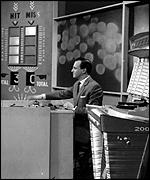
Juke Box JuryLennon was invited early in the Beatles’ career to appear on Juke Box Jury, a records review show that allowed a panel of guests to deliver opinions on the latest songs of the day. Lennon’s appearance became infamous for his negative comments regarding every song that was presented. His reviews are honest, and the negative reviews he provides are largely due to the fact that the songs were not in the R&B or rock ‘n’ roll genres that he preferred. Though some viewers wrote in to the British press complaining about John’s harsh words, the audience at this particular appearance certainly seemed to enjoy his jokes and put downs of the records. His comments on Elvis here he would repeat for the rest of his life – how Elvis had changed after he joined the Army, and became “middle-aged” – and the other Beatles agreed with this sentiment. The other panel guest John converses with at one point is Katie Boyle, a TV presenter who was a regular guest on the show. The first song reviewed, “Southend” by Cleo Laine, does not appear on the available recordings, and so Lennon’s comments begin with the second song presented.

The Tymes – “So Much In Love”

Lennon: I thought it was a Rolf Harris at first. And then I thought, oh, it’s the Drifters. The style was all right, but it wasn’t good enough in that idiom.

Elvis Presley – “(You’re The) Devil In Disguise”

Lennon: Well, you know, I used to go mad on Elvis, like all the group. But, you know, not now, I don’t like it. And I hate songs with “walk” and “talk” in it, you know, those lyrics. “She walks, she talks,” you know, don’t like that. And I don’t like the double beat, um-cha-um-cha, that bit, it’s awful. Poor old Elvis.

[audience laughs]

Lennon: I’ve got all his early records, and I keep playing them thinking, he must make another like this. But somebody said today he sounds like Bing Crosby now and he does.

[audience laughs]

Lennon: You’ll get these people writing in now I know and saying, “What do you mean?” But I don’t like him anymore.

Q: Thank you. Katie.

Boyle: If he did sound like Bing Crosby, would it be bad?

Lennon: Well, for Elvis, yes.

[audience laughs]

Miriam Makeba – “The Click Song”

Lennon: If it was in English, it would mean even less. It’s intriguing because it’s foreign, you know, but you can pick them out a mile away, all the gimmicks and all the different styles.

Tom Glaser – “On Top Of Spaghetti”

Lennon: Well, I can’t stand these “all together now” records, you know. I like the idea of back-…one shouting and one answering, but, you know, not that. I prefer the recent Little Eva, “Smoky Locomotion,” folks.

[audience laughs]

Lennon: But not that. It’s like, you know, an outing, a coach trip.

Q: Coach trips are very popular.

Lennon: Yeah, they don’t sell, though.

[audience laughs]

Russ Conway – “Flamenco”

Lennon: I like pianos and things, you know, but not sort of pub pianos playing flamenco music…it still sounds honky, you know. Didn’t sound anything like flamenco…he hasn’t pinched the best bits out of real Spanish music, I don’t think. Sorry.

Paul & Paula – “First Quarrel”

Lennon: Well, I like their first record [“Hey Paula”]. Because I like the octave singing, her singing, you know, one above him, and it wasn’t bad, I didn’t buy it. And the second one, you know, wasn’t worth bothering. This…and this had Jim in, you know, and all these American records are always about Jim and Bobby and Alfred and all this.

[audience laughs]

Lennon: I don’t like it, you know.

Julie Grant – “Don’t Ever Let Me Down”

Lennon: I can’t think of a thing to say. At the beginning I thought, oh, it’s one of those with an intro, but the intro wasn’t strong enough. No, you know, I don’t want to say anything about…

Q: Do you like girls records or not?

Lennon: Yeah, well I like girl singers, I like the Shirelles and the Chiffons, you know, they’re different. But I don’t…I can’t think of any girl in particular.

Q: But not that particular record.

Lennon: No.


The show took up most of John’s evening up until 9:15 pm, and he was also scheduled to appear at a show in Abergavenny later that evening. The Beatles’ manager Brian Epstein arranged for a helicopter to take Lennon to the concert, which arrived at the Penypound football ground at 9:50 pm, in time for the show which earned the Beatles £250.
Three records reviewed on the show that never aired included “Lies” by Johnny Sandon and the Remo Four, “Too Late To Worry” by Richard Anthony, and “Just One Look” by Doris Troy. Both the Remo Four and Doris Troy would later work with George Harrison, with Troy releasing an album on the Beatles’ Apple label in 1970.